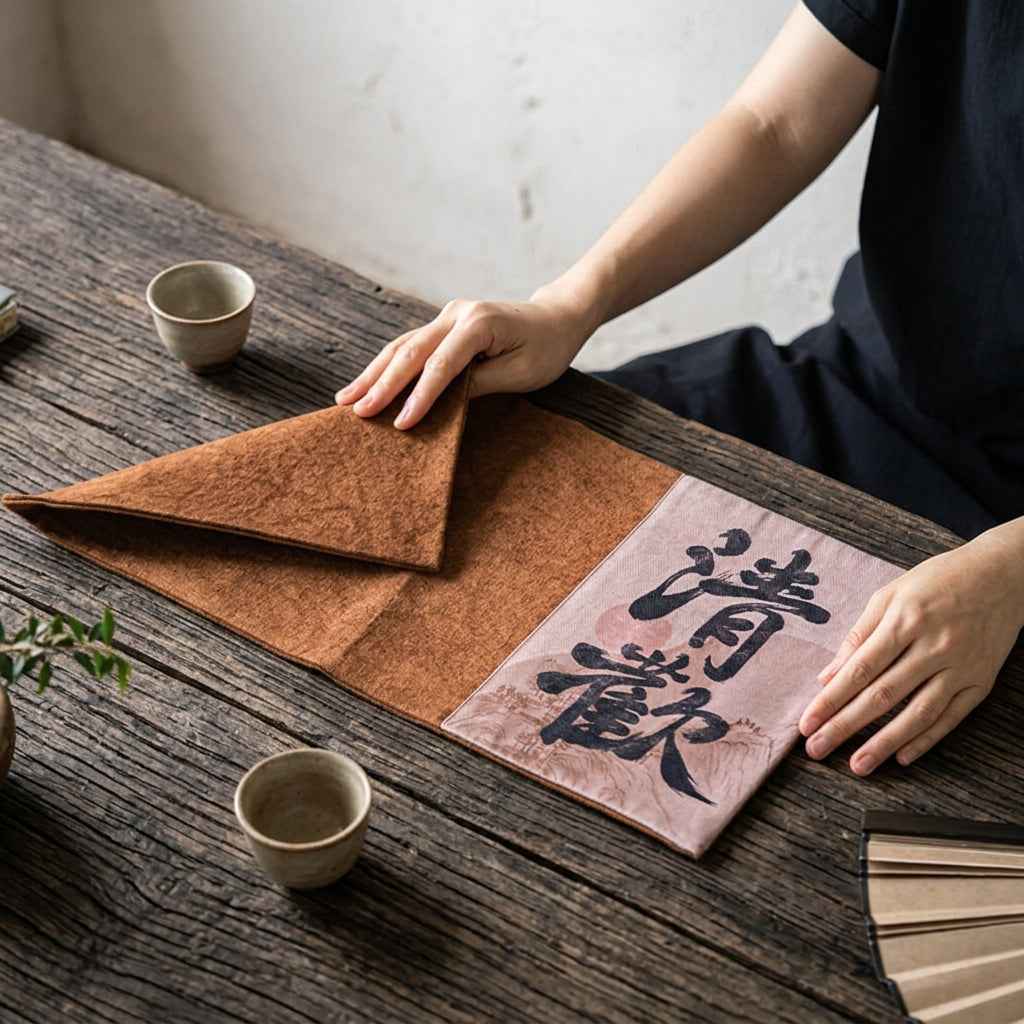
A Layer of Calm for the Table
This indigo table runner brings a quiet sense of rhythm to everyday surfaces.
Soft, subtle, and grounded — it transforms a table without overwhelming it.
Hand-Dyed Indigo Textile
Each piece is dyed individually, resulting in natural variations in tone and pattern.
No two runners are exactly the same — each carries its own character.
Designed for Dining & Tea Rituals
- Perfect for dining tables or tea setups
- Adds depth to wooden or stone surfaces
- Pairs naturally with ceramics and natural materials
Soft Texture, Visual Balance
The fabric introduces a gentle contrast — soft against hard surfaces,
creating a more balanced and inviting space.
Wabi-Sabi in Everyday Use
Irregular edges, subtle dye variations, and a natural feel reflect a slower,
more intentional way of living.
Shipping & Care
- Hand wash or gentle cycle recommended
- Color may soften over time
- Each piece varies slightly in tone and texture
Hand-dyed indigo · Soft cotton · Calm table styling
Dipped eight to twelve times in natural indigo. The blue deepens with every wash. In five years, it'll be the most beautiful thing on your table.
The Maker
A Miao indigo dye workshop in Guizhou. The head dyer learned from her mother, who learned from hers. They don't measure anything — the color comes from feel, smell, and the way the vat looks at dawn.
The Place
Guizhou, southwestern China. Mountain indigo country. The dye vats are fed by spring water, the linen is woven locally, and the whole process runs on sunlight and patience.
The Craft
Hand-woven linen, dipped 8–12 times in natural indigo vats with oxidation between each dip. The color goes from pale sky to deep midnight depending on the number of dips. The linen is then stone-washed for softness. Every wash deepens the blue and softens the hand. Indigo doesn't fade — it evolves.
At Home
Down the center of the dining table. Across a console. On a garden table for outdoor dinners. Wash it when it needs washing — the color will only get richer.
The pattern was made by folding, binding, and dipping — not printing. Unfold it after the final dip and the design reveals itself. Even the dyer doesn't know exactly what it will look like.
The Maker
A Miao textile studio in Guizhou. They dye linen and cotton using the same shibori techniques their grandmothers used — binding, clamping, stitching, then dipping. The patterns are geometric and organic at the same time.
The Place
Guizhou, China. The mountains here keep traditions alive by making them hard to reach. The indigo vats in this region are some of the oldest continuously used dye vats in the world.
The Craft
100% linen cover, shibori resist-dyed in natural indigo. The fabric is folded and clamped before each dip — the resisted areas stay light, the exposed areas go deep blue. Multiple dips create layers of intensity. The insert is a cotton-linen blend with a medium-firm fill. Removable cover with hidden zipper.
At Home
On the sofa you actually sit on. On the reading chair. On the bed that needs one more thing. The indigo will rub off slightly at first — that's natural. After a few weeks, it settles into its permanent color.