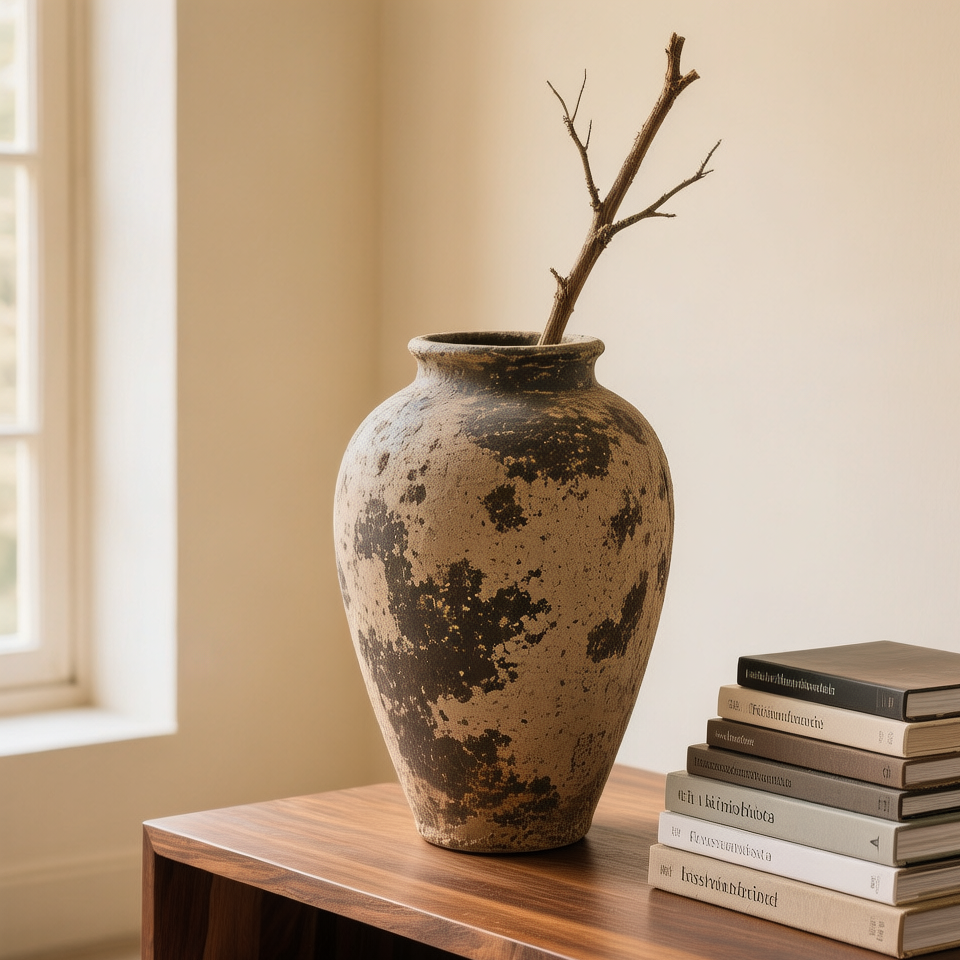
A vase that doesn't need flowers
Most vases are designed to disappear when you fill them. This one was made to be seen — even when it's empty. The raw, unglazed surface catches light like weathered stone. Each piece comes out of the kiln slightly different, because the maker chose not to control that.
Set a single dried branch in it. Or nothing at all. It works either way.
Details
-
Material: Raw ceramic, unglazed finish
-
Craft: Hand-thrown in Jingdezhen
-
Style: Wabi-sabi / Japanese rustic
-
Height: ~25 cm (large)
-
Weight: ~1.4 kg
-
Color: Warm earth tone with natural texture variation
Care
- No glaze — avoid water inside (use a liner or dried arrangements)
- Dust with soft dry cloth
- Surface will darken naturally over time — embrace it
Hand-thrown in Jingdezhen. Each piece varies in texture and form.
Intentionally imperfect — no two share the same silhouette. The beauty of wabi-sabi is that it doesn't ask for permission.
The Maker
A ceramic studio in Jingdezhen that makes small-batch wabi-sabi pieces. The potter throws each vase quickly, then distorts it slightly by hand — a press here, a lean there. The imperfection is deliberate.
The Place
Jingdezhen, Jiangxi. Where perfection has been the standard for a thousand years. This studio is the counterargument — and it's thriving.
The Craft
Hand-thrown stoneware with a raw, unglazed exterior and clear-glazed interior. The form is slightly asymmetrical — the potter shapes it on the wheel, then gently presses one side before the clay sets. No two vases have the same lean. The interior glaze makes it watertight; the exterior texture ages beautifully, developing a soft patina from handling.
At Home
One dried branch. One flower. Or empty — it's a sculpture when it's not a vase. Put it on a stack of books, on the bathroom counter, on the windowsill where the light catches its silhouette.